Why Do Change Programmes Fail? (And What Works Instead)
Scaling
Scaling
/
/
TEP
TEP
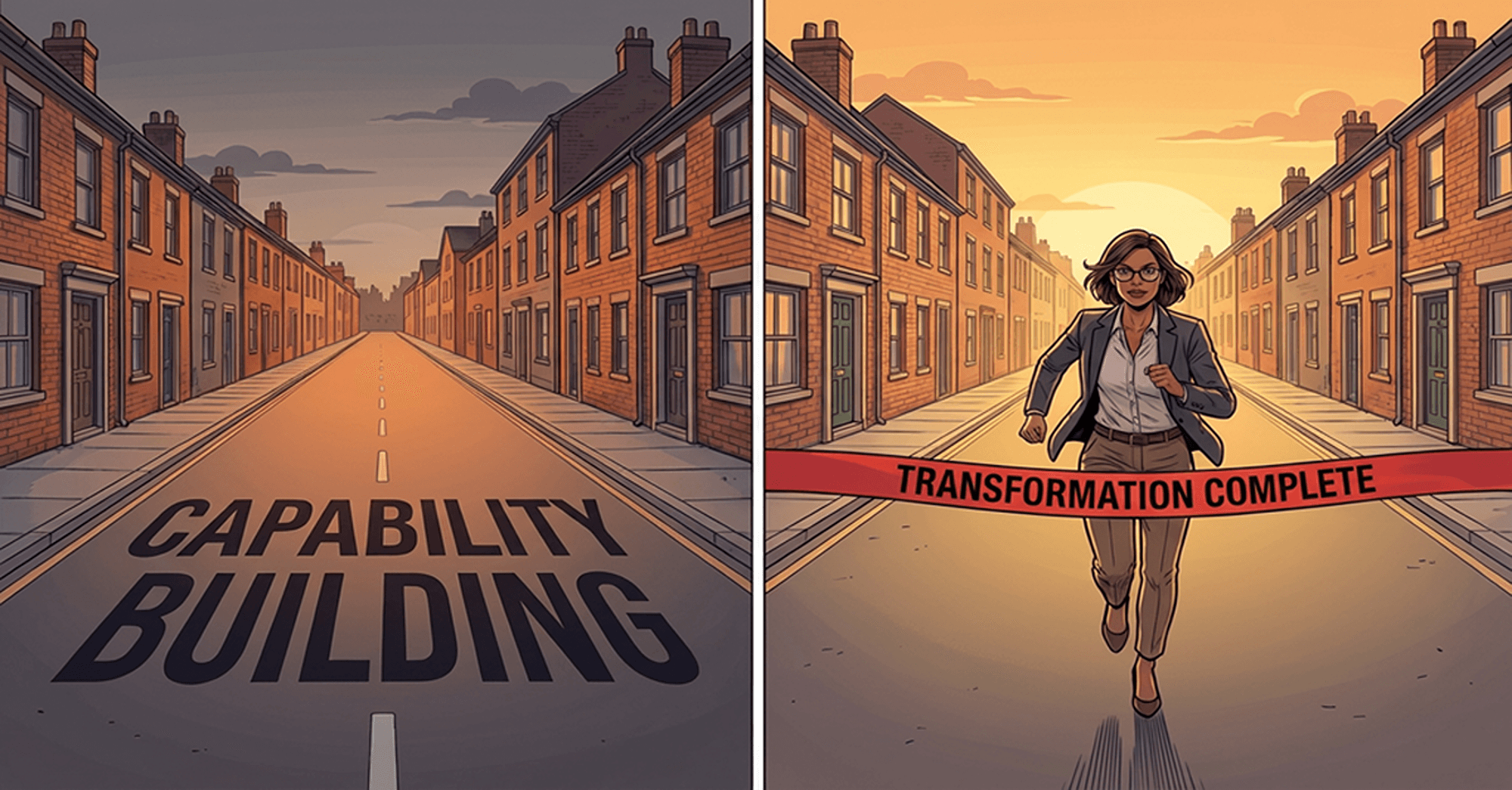
"We spent £200K on a transformation programme. Six months after the consultants left: Back to the old ways. Then spent £80K on culture workshops. Same thing. What went wrong?"
The uncomfortable answer: You tried changing behaviours without changing structure.
Cannot change culture/operations by talking about values. Must change structure first.
Research shows 70% of transformation programmes fail because they focus on delivery not capability building, and attempt cultural change without changing underlying structures, systems, and incentives (McKinsey; Hughes, 2011).
The £200K Transformation Failure Pattern
What happened:
Months 1-2: Brilliant diagnosis, workshops, identified problems
Months 3-5: Perfect recommendations designed
Month 6: Big bang implementation, training, programme "complete," consultants exit
Months 7-12: The team reverted to old ways, nothing stuck
Total: £200K + 12 months + zero lasting change
Why it failed: Transformation run as a PROJECT (deliverables, end date) not CAPABILITY BUILDING (sustained change, no end date).
Why Structure Must Change Before Culture
The myth: Change culture through values workshops and training.
The reality: Culture = behaviours that emerge from structure.
If decision-making is centralised: You get a dependent culture (regardless of values)
If accountability is unclear: You get a risk adverse behaviour culture (regardless of workshops)
If incentives reward individuals: You get a siloed culture (regardless of training)
Real example: £20M business ran "empowerment" workshops. £80K spent (part of £200K transformation).
What didn't change:
• Decision-making still centralised
• Accountability still unclear
• Incentives still individual-based
Result: Culture unchanged. The team knew "empowerment" was desired but couldn't act empowered within the structure.
What Actually Works: Structure First
Real transformation: £26M business wanted "empowered, decisive" culture.
What they changed (structure not workshops):
Months 1-2: Clarified who decides what
• Who decides what without approval
• Budget authority defined
• Approval thresholds clear
Months 3-4: Changed reporting structure
• Flattened from 5 layers to 3
• Reduced approval chains
• Cross-functional teams created
Months 4-5: Modified incentives
• Shifted from individual to team-based
• Rewarded collaboration
• Penalised silo behaviour
Month 6: New culture emerged naturally
• People making decisions (because they could)
• Collaborating (because rewarded)
• Less risk-adverse behaviour (because accountability clear)
Cost: £40K restructuring vs £200K transformation programmes
Result: Sustainable culture change (still in place 18 months later)
Zero workshops. Changed structure. Culture followed automatically.
The Capability-Building Approach
Programme Delivery (fails 68%):
• 4-6 month programme
• Change everything simultaneously
• Expert designs, team trains
• Success = deliverables completed
• 32% success rate
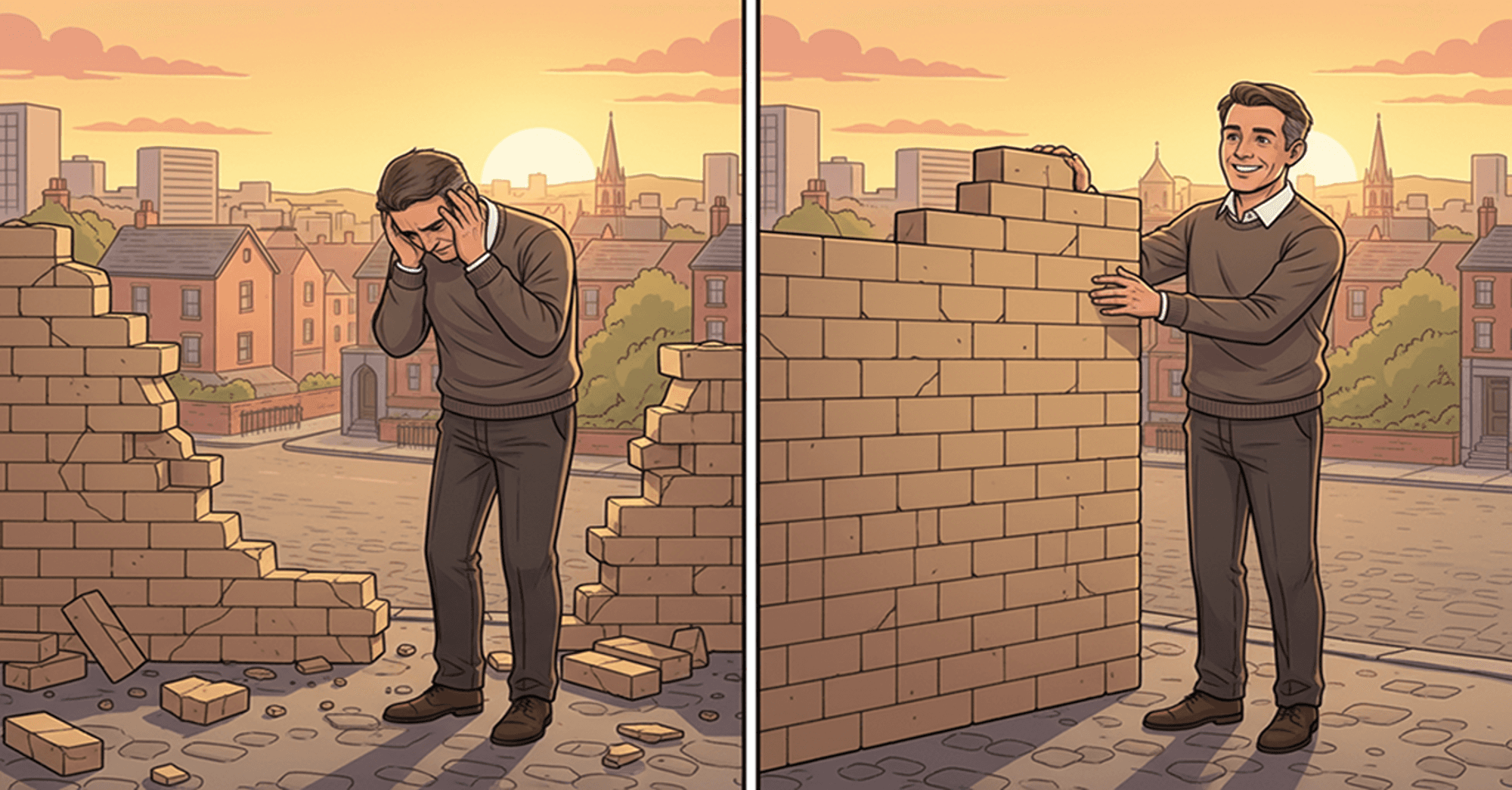
Capability Building (works 73%):
• 12-18 month systematic approach
• One capability at a time until embedded
• Expert builds WITH the team over months
• Success = still working 18 months later
• 73% success rate
The Timeline That Works
Months 1-4: Build ONE capability completely. Not five partially. Example: Decision-making frameworks. Only move to next when this runs independently.
Months 5-8: Add SECOND capability. First still running (critical test). Example: Resource planning.
Months 9-12: Add THIRD capability. First two still running. Example: Operational planning.
Months 13-18: Complete core capabilities. 4-5 capabilities embedded. Test: Founder takes 2-week holiday, business operates smoothly.
Total: 18 months minimum
Anyone promising transformation or culture change in 6 months is selling programme delivery not sustainable change.
When You Should NOT Attempt This
Don't attempt if:
• In crisis (stabilise first)
• Want results in 6 months (you want delivery not capability)
• "Transform everything" (too broad)
• Leadership not aligned
• Satisfying board requirements (you'll revert)
Right time:
• Specific capability gaps identified
• Ready for 12-18 months
• Leadership committed
• Business stable
Frequently Asked Questions
Why do transformation programmes fail?
Transformation programmes fail because they're structured as projects with end dates rather than capability building with sustainability measures. 68% fail because they focus on programme delivery (training completed, processes documented) not building team capability to sustain changes 18+ months later. Only 32% of project-based transformations are still running 18 months later vs 73% capability-based.
Why do culture change programmes fail?
Culture change programmes fail because they try changing culture directly through workshops while leaving structure unchanged. 74% fail because culture is behaviours that emerge from structure, systems, incentives. If decision-making is centralised, you get a dependent culture regardless of workshops. Cannot change culture without changing structure first. Structure drives behaviour, behaviour creates culture.
How long does real transformation take?
Real transformation takes 12-18 months minimum for sustainable change at £5M-£100M businesses. A single capability requires 4-6 months to embed. Full transformation of 4-5 key capabilities requires 15-18 months systematically. Programmes promising 6 months create temporary change that reverts within 12 months. Fast programmes have a 68% failure rate vs 73% success for 18-month capability building.
"We spent £200K on a transformation programme. Six months after the consultants left: Back to the old ways. Then spent £80K on culture workshops. Same thing. What went wrong?"
The uncomfortable answer: You tried changing behaviours without changing structure.
Cannot change culture/operations by talking about values. Must change structure first.
Research shows 70% of transformation programmes fail because they focus on delivery not capability building, and attempt cultural change without changing underlying structures, systems, and incentives (McKinsey; Hughes, 2011).
The £200K Transformation Failure Pattern
What happened:
Months 1-2: Brilliant diagnosis, workshops, identified problems
Months 3-5: Perfect recommendations designed
Month 6: Big bang implementation, training, programme "complete," consultants exit
Months 7-12: The team reverted to old ways, nothing stuck
Total: £200K + 12 months + zero lasting change
Why it failed: Transformation run as a PROJECT (deliverables, end date) not CAPABILITY BUILDING (sustained change, no end date).
Why Structure Must Change Before Culture
The myth: Change culture through values workshops and training.
The reality: Culture = behaviours that emerge from structure.
If decision-making is centralised: You get a dependent culture (regardless of values)
If accountability is unclear: You get a risk adverse behaviour culture (regardless of workshops)
If incentives reward individuals: You get a siloed culture (regardless of training)
Real example: £20M business ran "empowerment" workshops. £80K spent (part of £200K transformation).
What didn't change:
• Decision-making still centralised
• Accountability still unclear
• Incentives still individual-based
Result: Culture unchanged. The team knew "empowerment" was desired but couldn't act empowered within the structure.
What Actually Works: Structure First
Real transformation: £26M business wanted "empowered, decisive" culture.
What they changed (structure not workshops):
Months 1-2: Clarified who decides what
• Who decides what without approval
• Budget authority defined
• Approval thresholds clear
Months 3-4: Changed reporting structure
• Flattened from 5 layers to 3
• Reduced approval chains
• Cross-functional teams created
Months 4-5: Modified incentives
• Shifted from individual to team-based
• Rewarded collaboration
• Penalised silo behaviour
Month 6: New culture emerged naturally
• People making decisions (because they could)
• Collaborating (because rewarded)
• Less risk-adverse behaviour (because accountability clear)
Cost: £40K restructuring vs £200K transformation programmes
Result: Sustainable culture change (still in place 18 months later)
Zero workshops. Changed structure. Culture followed automatically.
The Capability-Building Approach
Programme Delivery (fails 68%):
• 4-6 month programme
• Change everything simultaneously
• Expert designs, team trains
• Success = deliverables completed
• 32% success rate
Capability Building (works 73%):
• 12-18 month systematic approach
• One capability at a time until embedded
• Expert builds WITH the team over months
• Success = still working 18 months later
• 73% success rate
The Timeline That Works
Months 1-4: Build ONE capability completely. Not five partially. Example: Decision-making frameworks. Only move to next when this runs independently.
Months 5-8: Add SECOND capability. First still running (critical test). Example: Resource planning.
Months 9-12: Add THIRD capability. First two still running. Example: Operational planning.
Months 13-18: Complete core capabilities. 4-5 capabilities embedded. Test: Founder takes 2-week holiday, business operates smoothly.
Total: 18 months minimum
Anyone promising transformation or culture change in 6 months is selling programme delivery not sustainable change.
When You Should NOT Attempt This
Don't attempt if:
• In crisis (stabilise first)
• Want results in 6 months (you want delivery not capability)
• "Transform everything" (too broad)
• Leadership not aligned
• Satisfying board requirements (you'll revert)
Right time:
• Specific capability gaps identified
• Ready for 12-18 months
• Leadership committed
• Business stable
Frequently Asked Questions
Why do transformation programmes fail?
Transformation programmes fail because they're structured as projects with end dates rather than capability building with sustainability measures. 68% fail because they focus on programme delivery (training completed, processes documented) not building team capability to sustain changes 18+ months later. Only 32% of project-based transformations are still running 18 months later vs 73% capability-based.
Why do culture change programmes fail?
Culture change programmes fail because they try changing culture directly through workshops while leaving structure unchanged. 74% fail because culture is behaviours that emerge from structure, systems, incentives. If decision-making is centralised, you get a dependent culture regardless of workshops. Cannot change culture without changing structure first. Structure drives behaviour, behaviour creates culture.
How long does real transformation take?
Real transformation takes 12-18 months minimum for sustainable change at £5M-£100M businesses. A single capability requires 4-6 months to embed. Full transformation of 4-5 key capabilities requires 15-18 months systematically. Programmes promising 6 months create temporary change that reverts within 12 months. Fast programmes have a 68% failure rate vs 73% success for 18-month capability building.

" height="39.65002px" id="dyBuTZHxn" transform="translate(0 1.907)" width="39.651px"/><path d="M 20.978 11.868 C 21.065 12.063 21.069 12.282 20.99 12.482 C 20.912 12.681 20.756 12.839 20.559 12.919 C 17.474 14.2 5.621 19.119 1.097 20.999 C 0.801 21.122 0.46 21.051 0.233 20.827 C 0.006 20.599 -0.062 20.257 0.06 19.962 C 1.932 15.436 6.835 3.575 8.112 0.491 C 8.193 0.291 8.352 0.134 8.55 0.054 C 8.749 -0.023 8.971 -0.018 9.167 0.068 C 14.398 2.447 18.596 6.639 20.978 11.868 Z" fill="rgb(243, 183, 3)" height="21.059159164719897px" id="j9USqGJeT" transform="translate(20.497 0)" width="21.04621552472423px"/></svg>)
The Executive
Partnership
Built to Scale. Ready to Sell.
The Executive Partnership Limited
Company No. 16340502 | Registered in England and Wales
Registered Office: Chandos House, School Lane, Buckingham, MK18 1HD, UK
The Executive
Partnership
Built to Scale. Ready to Sell.
The Executive Partnership Limited
Company No. 16340502 | Registered in England and Wales
Registered Office: Chandos House, School Lane, Buckingham, MK18 1HD, UK
The Executive Partnership
Built to Scale. Ready to Sell.
The Executive Partnership Limited
Company No. 16340502 | Registered in England and Wales
Registered Office: Chandos House, School Lane, Buckingham, MK18 1HD, UK