Why Isn't Our Strategy Getting Executed? (The Structure Problem)
Scaling
Scaling
/
/
TEP
TEP
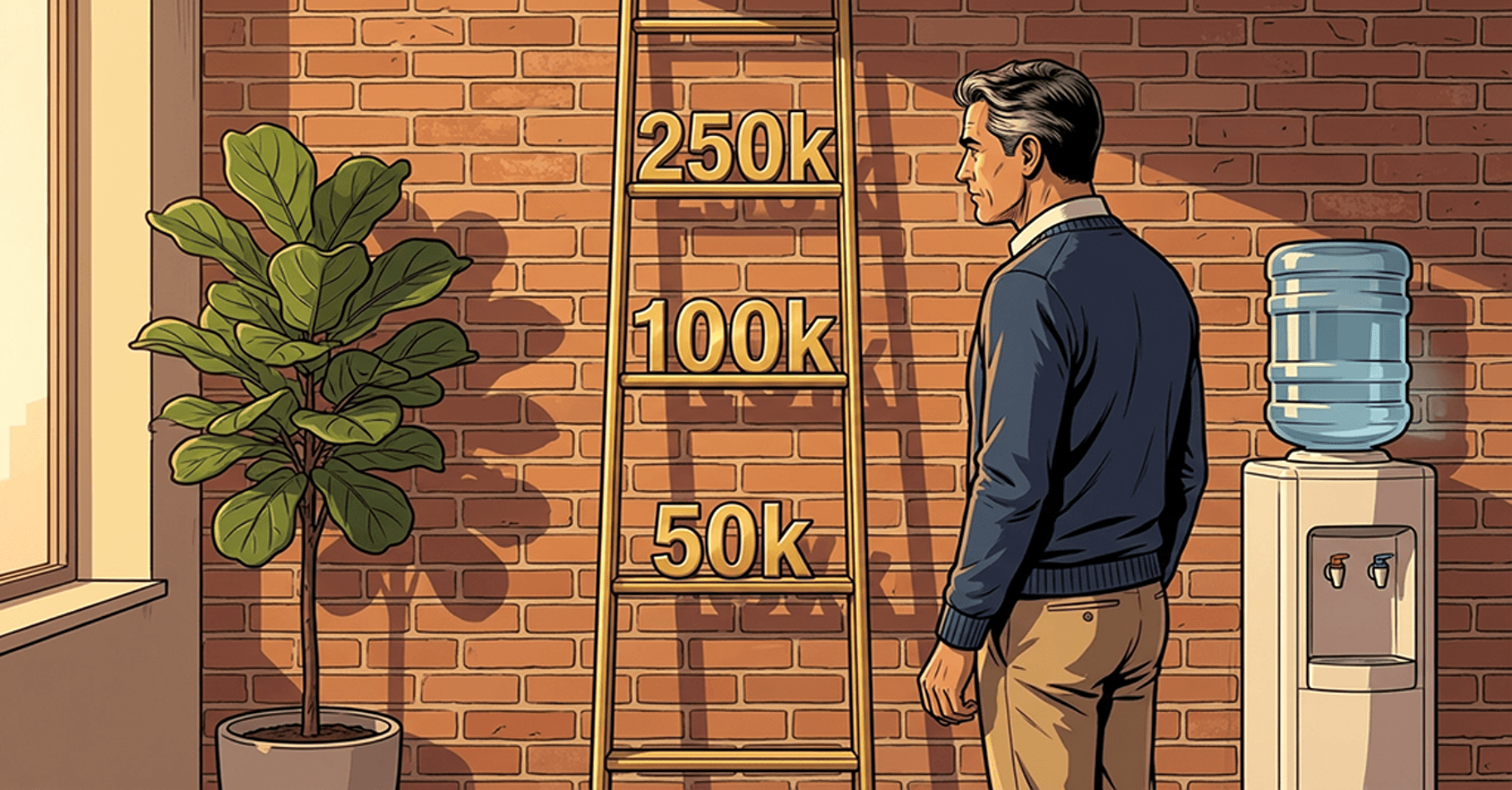
"Clear strategy. Aligned team. Six months later: Minimal execution. Meanwhile we have 20+ hours of meetings weekly trying to fix alignment. And every decision takes months through consensus. What's wrong?"
Answer: Not strategy. Not communication. Not commitment.
Structure.
Three structure problems kill execution:
1. Unclear who decides what (64% of strategic plan failures)
2. Consensus on everything (costs £100K-£300K annually)
3. Meetings instead of structure (20+ hours weekly, still misaligned)
Problem 1: Who Decides What Kills Execution
Real example: £25M business, clear growth strategy: Expand to second geography.
Timeline:
• Month 1: Strategy approved
• Month 3: Still negotiating first lease (needed founder approval)
• Month 6: First hire made (each hire needed approval)
• Month 9: Finally launched
Competitor with clarity who decides what: 4 months
Cost of delay: £400K+ missed revenue
Problem: Not strategy. Who decides what.
What “Who Decides What” Actually Means
For each strategic decision type, define:
1. Who can decide without approval?
Example: Head of Operations can approve leases <£100K
2. Approval threshold?
Example: £100K-£250K needs CFO/FD, >£250K needs CEO
3. Budget authority?
Example: £50K discretionary quarterly
4. Who has veto?
Example: CEO can veto, must explain reasoning
Without these defined: Every decision unclear, escalates to founder, execution stalls.
How to Fix Strategy Execution Through Who Decides What
Week 1: Map strategic priorities
Top 5 for next 12 months
Week 2: Identify decision types
What decisions are needed per priority?
Week 3: Define who decides what
Who decides? Approval needed? Budget? Veto?
Week 4: Communicate and test
Share document, run scenarios, clarify
Result: 3-4x faster execution of the same strategy.
Problem 2: Consensus Costs £200K Annually
Real example: £20M business used consensus for pricing.
Timeline: 4 months to reach consensus
Final price: Too low to be profitable, too high to be competitive
Result: Lost £200K opportunity
The consensus trap: Satisfying everyone produces an outcome satisfying nobody.
When Consensus Works vs Fails
Use consensus for:
• Culture decisions (values, policies)
• Major org changes (relocation, restructuring)
• Need commitment more than speed
Don't use consensus for:
• Strategic execution (pricing, market entry)
• Urgent decisions (competitive threats)
• When a right answer exists (expertise matters)
The framework:
• High speed need → Solo/small group
• High quality need → Use expertise not democracy
• High commitment need → Need consensus
The Three Costs of Too Much Consensus
Cost 1: Opportunity costs (£50K-£150K annually)
Opportunities pass during 4-month consensus
Cost 2: Quality degradation (£50K-£100K)
Watered down to lowest common denominator
Cost 3: Accountability disappearance (£50K-£100K)
"Everyone decided" means nobody is accountable
Total: £150K-£350K annually
Problem 3: More Meetings Don't Fix Alignment
£24M business:
• Daily standups (5 hours weekly)
• Weekly team meetings (6 hours)
• Monthly all-hands (3 hours)
• Bi-weekly cross-functional (4 hours)
• Ad hoc alignment (5+ hours)
• Total: 23+ hours weekly
• Result: Still deeply misaligned
Root problem: Unclear who decides what, not insufficient communication.
After fixing structure:
• Weekly check-in (2 hours)
• Monthly all-hands (2 hours)
• Total: 10-12 hours monthly
• Result: Better aligned than before
What changed: Fixed structure (who decides what), reduced communication need.
What Actually Creates Alignment
Not:
• More meetings
• More communication
• More updates
But:
• Clear who decides what (who decides what)
• Defined accountability (who owns outcomes)
• Shared metrics (measuring the same things)
When structure is right: Minimal communication needed
When structure is wrong: Infinite communication cannot fix it
The Complete Solution
1. Clarify who decides what (eliminates execution bottleneck)
• Document who decides what
• Define approval thresholds
• Assign budget authority
2. Use consensus selectively (saves £200K annually)
• Culture/major changes: Yes
• Strategy execution/urgent: No
• Match approach to decision type
3. Fix structure before adding meetings (cuts meeting time 60%)
• Clear who decides what
• Defined accountability
• Shared metrics
Result: Strategy executed 3-4x faster with 60% fewer meetings and £200K lower decision-making costs.
Frequently Asked Questions
Why does strategy fail without clear Who Decides What?
Strategy fails without clear Who Decides What because strategic decisions escalate to the founder who has 20+ priorities, causing a 60-80% execution speed drop. Research shows 64% of strategic plans fail due to unclear Who Decides What not unclear strategy. When Who Decides What is unclear, everyone escalates to be safe, opportunities pass before decisions are made. Clear who decides what enable 3-4x faster execution.
What is the cost of consensus decision-making?
Consensus costs £100K-£300K annually through: (1) Opportunity costs £50K-£150K decisions take 3-4x longer, (2) Quality degradation £50K-£100K outcomes watered down to satisfy everyone, (3) Accountability disappearance £50K-£100K when everyone owns the decision, nobody is accountable. Example: £20M business used consensus for pricing, took 4 months, final price neither profitable nor competitive, lost £200K.
Why don't more meetings improve alignment?
More meetings don't improve alignment because alignment comes from clear structure (who decides what, accountability, shared metrics) not communication frequency. Research shows businesses spending 20+ hours weekly in alignment meetings are less aligned than businesses spending 5 hours. When structure is unclear, infinite communication cannot fix it. When structure is clear, minimal communication maintains alignment. Misalignment is a structural problem 80% of the time.
"Clear strategy. Aligned team. Six months later: Minimal execution. Meanwhile we have 20+ hours of meetings weekly trying to fix alignment. And every decision takes months through consensus. What's wrong?"
Answer: Not strategy. Not communication. Not commitment.
Structure.
Three structure problems kill execution:
1. Unclear who decides what (64% of strategic plan failures)
2. Consensus on everything (costs £100K-£300K annually)
3. Meetings instead of structure (20+ hours weekly, still misaligned)
Problem 1: Who Decides What Kills Execution
Real example: £25M business, clear growth strategy: Expand to second geography.
Timeline:
• Month 1: Strategy approved
• Month 3: Still negotiating first lease (needed founder approval)
• Month 6: First hire made (each hire needed approval)
• Month 9: Finally launched
Competitor with clarity who decides what: 4 months
Cost of delay: £400K+ missed revenue
Problem: Not strategy. Who decides what.
What “Who Decides What” Actually Means
For each strategic decision type, define:
1. Who can decide without approval?
Example: Head of Operations can approve leases <£100K
2. Approval threshold?
Example: £100K-£250K needs CFO/FD, >£250K needs CEO
3. Budget authority?
Example: £50K discretionary quarterly
4. Who has veto?
Example: CEO can veto, must explain reasoning
Without these defined: Every decision unclear, escalates to founder, execution stalls.
How to Fix Strategy Execution Through Who Decides What
Week 1: Map strategic priorities
Top 5 for next 12 months
Week 2: Identify decision types
What decisions are needed per priority?
Week 3: Define who decides what
Who decides? Approval needed? Budget? Veto?
Week 4: Communicate and test
Share document, run scenarios, clarify
Result: 3-4x faster execution of the same strategy.
Problem 2: Consensus Costs £200K Annually
Real example: £20M business used consensus for pricing.
Timeline: 4 months to reach consensus
Final price: Too low to be profitable, too high to be competitive
Result: Lost £200K opportunity
The consensus trap: Satisfying everyone produces an outcome satisfying nobody.
When Consensus Works vs Fails
Use consensus for:
• Culture decisions (values, policies)
• Major org changes (relocation, restructuring)
• Need commitment more than speed
Don't use consensus for:
• Strategic execution (pricing, market entry)
• Urgent decisions (competitive threats)
• When a right answer exists (expertise matters)
The framework:
• High speed need → Solo/small group
• High quality need → Use expertise not democracy
• High commitment need → Need consensus
The Three Costs of Too Much Consensus
Cost 1: Opportunity costs (£50K-£150K annually)
Opportunities pass during 4-month consensus
Cost 2: Quality degradation (£50K-£100K)
Watered down to lowest common denominator
Cost 3: Accountability disappearance (£50K-£100K)
"Everyone decided" means nobody is accountable
Total: £150K-£350K annually
Problem 3: More Meetings Don't Fix Alignment
£24M business:
• Daily standups (5 hours weekly)
• Weekly team meetings (6 hours)
• Monthly all-hands (3 hours)
• Bi-weekly cross-functional (4 hours)
• Ad hoc alignment (5+ hours)
• Total: 23+ hours weekly
• Result: Still deeply misaligned
Root problem: Unclear who decides what, not insufficient communication.
After fixing structure:
• Weekly check-in (2 hours)
• Monthly all-hands (2 hours)
• Total: 10-12 hours monthly
• Result: Better aligned than before
What changed: Fixed structure (who decides what), reduced communication need.
What Actually Creates Alignment
Not:
• More meetings
• More communication
• More updates
But:
• Clear who decides what (who decides what)
• Defined accountability (who owns outcomes)
• Shared metrics (measuring the same things)
When structure is right: Minimal communication needed
When structure is wrong: Infinite communication cannot fix it
The Complete Solution
1. Clarify who decides what (eliminates execution bottleneck)
• Document who decides what
• Define approval thresholds
• Assign budget authority
2. Use consensus selectively (saves £200K annually)
• Culture/major changes: Yes
• Strategy execution/urgent: No
• Match approach to decision type
3. Fix structure before adding meetings (cuts meeting time 60%)
• Clear who decides what
• Defined accountability
• Shared metrics
Result: Strategy executed 3-4x faster with 60% fewer meetings and £200K lower decision-making costs.
Frequently Asked Questions
Why does strategy fail without clear Who Decides What?
Strategy fails without clear Who Decides What because strategic decisions escalate to the founder who has 20+ priorities, causing a 60-80% execution speed drop. Research shows 64% of strategic plans fail due to unclear Who Decides What not unclear strategy. When Who Decides What is unclear, everyone escalates to be safe, opportunities pass before decisions are made. Clear who decides what enable 3-4x faster execution.
What is the cost of consensus decision-making?
Consensus costs £100K-£300K annually through: (1) Opportunity costs £50K-£150K decisions take 3-4x longer, (2) Quality degradation £50K-£100K outcomes watered down to satisfy everyone, (3) Accountability disappearance £50K-£100K when everyone owns the decision, nobody is accountable. Example: £20M business used consensus for pricing, took 4 months, final price neither profitable nor competitive, lost £200K.
Why don't more meetings improve alignment?
More meetings don't improve alignment because alignment comes from clear structure (who decides what, accountability, shared metrics) not communication frequency. Research shows businesses spending 20+ hours weekly in alignment meetings are less aligned than businesses spending 5 hours. When structure is unclear, infinite communication cannot fix it. When structure is clear, minimal communication maintains alignment. Misalignment is a structural problem 80% of the time.


" height="39.65002px" id="dyBuTZHxn" transform="translate(0 1.907)" width="39.651px"/><path d="M 20.978 11.868 C 21.065 12.063 21.069 12.282 20.99 12.482 C 20.912 12.681 20.756 12.839 20.559 12.919 C 17.474 14.2 5.621 19.119 1.097 20.999 C 0.801 21.122 0.46 21.051 0.233 20.827 C 0.006 20.599 -0.062 20.257 0.06 19.962 C 1.932 15.436 6.835 3.575 8.112 0.491 C 8.193 0.291 8.352 0.134 8.55 0.054 C 8.749 -0.023 8.971 -0.018 9.167 0.068 C 14.398 2.447 18.596 6.639 20.978 11.868 Z" fill="rgb(243, 183, 3)" height="21.059159164719897px" id="j9USqGJeT" transform="translate(20.497 0)" width="21.04621552472423px"/></svg>)
The Executive
Partnership
Built to Scale. Ready to Sell.
The Executive Partnership Limited
Company No. 16340502 | Registered in England and Wales
Registered Office: Chandos House, School Lane, Buckingham, MK18 1HD, UK
The Executive
Partnership
Built to Scale. Ready to Sell.
The Executive Partnership Limited
Company No. 16340502 | Registered in England and Wales
Registered Office: Chandos House, School Lane, Buckingham, MK18 1HD, UK
The Executive Partnership
Built to Scale. Ready to Sell.
The Executive Partnership Limited
Company No. 16340502 | Registered in England and Wales
Registered Office: Chandos House, School Lane, Buckingham, MK18 1HD, UK