How Do I Remove Founder Dependency Without Everything Falling Apart?
Scaling
Scaling
/
/
TEP
TEP
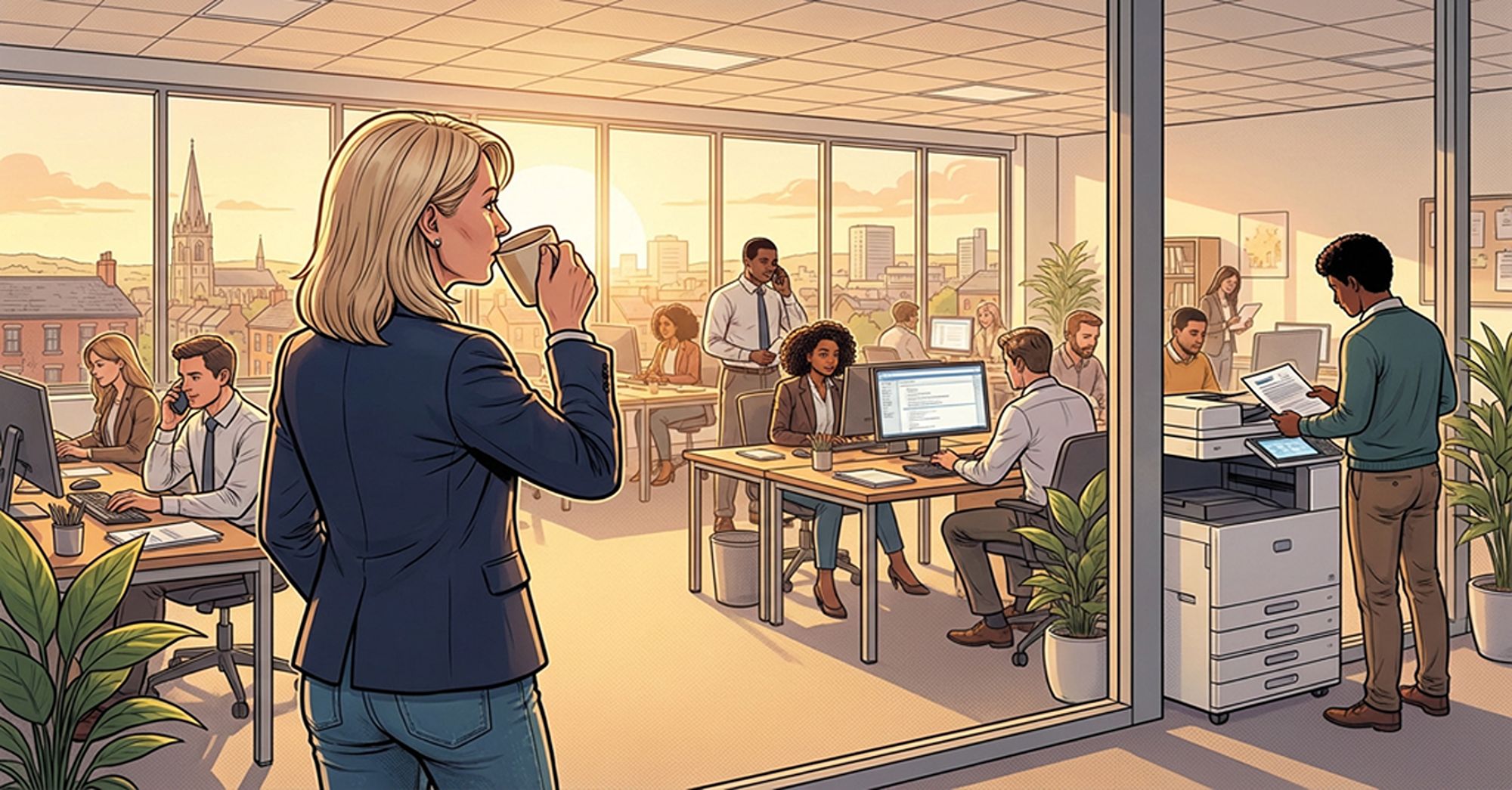
"I want to remove founder dependency but I'm terrified the business will collapse. Where do I start? What happens in the first 90 days?"
The truth no one tells you:
• It takes 12-18 months minimum, to remove founder dependency.
• It WILL feel broken in months 1-6 (that's progress)
• You'll want to take control back 100 times (don't)
• It works if you map decisions, build frameworks, transfer through coaching.
Plus the growth paradox: Being busier is WHY growth is slowing.
What Founder Dependency Costs at Exit
Two identical £25M businesses, same EBITDA (£2.5M):
Business A (Founder-Dependent): Sale at 4.2x = £10.5M
Business B (Systematized): Sale at 8.1x = £20.3M
Difference: £9.8M
Buyers don't want your genius. They want systems that work without you.
Why Being Busy Kills Growth
"We're busier than ever. Working 70+ hours. But growth is slowing. How?"
Because busy = working IN the business, not ON the business.
Time allocation predicts growth:
• High growth (20%+ annually): Founders spend 60% on strategic work
• Slow growth (<5%): Founders spend 80% on operational work
The trap: Success creates operational work → Founder gets busy → No time for growth initiatives → Growth slows → More operational problems → Busier → Slower growth.
The First 90 Days Roadmap
Wrong approach (28% success rate):
Delegate tasks to free up the calendar. Tell people what to do. Focus on reducing hours.
Result: The team executes tasks, still waits for decisions. Still a bottleneck.
Right approach (71% success rate):
Days 1-30: MAP Every Decision
Not tasks - DECISIONS. Keep a log: what decision, what factors were considered, how you decided. Most founders: 40-60 distinct decision types.
Days 31-60: DOCUMENT Decision Frameworks
For each type: How do you think about it? What factors? What trade-offs? What principles? Cannot rush this.
Days 61-90: TEST Frameworks with the Team
The team makes decisions using the framework. They explain their thinking. You coach the reasoning (not the outcome). Repeat 10-15 times until it's internalized.
The 18-Month Timeline
Months 1-3: Everything Feels Slower
Building frameworks. The team is making mistakes you'd avoid. You want to step back in (don't).
Months 4-6: Still Feels Broken
The team is making more decisions, quality is variable. You're coaching, not doing. Performance might dip 5-10% (temporary).
Months 7-9: Starting to Work
Some decisions are happening correctly without you. Quality is matching or exceeding yours. You have time for strategic work.
Months 10-12: Running Differently
Most tactical/operational decisions are independent. You're focused on strategy. Performance is improving.
Months 13-18: Independence Proven
You take a 2-week holiday, zero contact. The business runs smoothly. Dependency removed.
Anyone promising 6 months hasn't done it successfully.
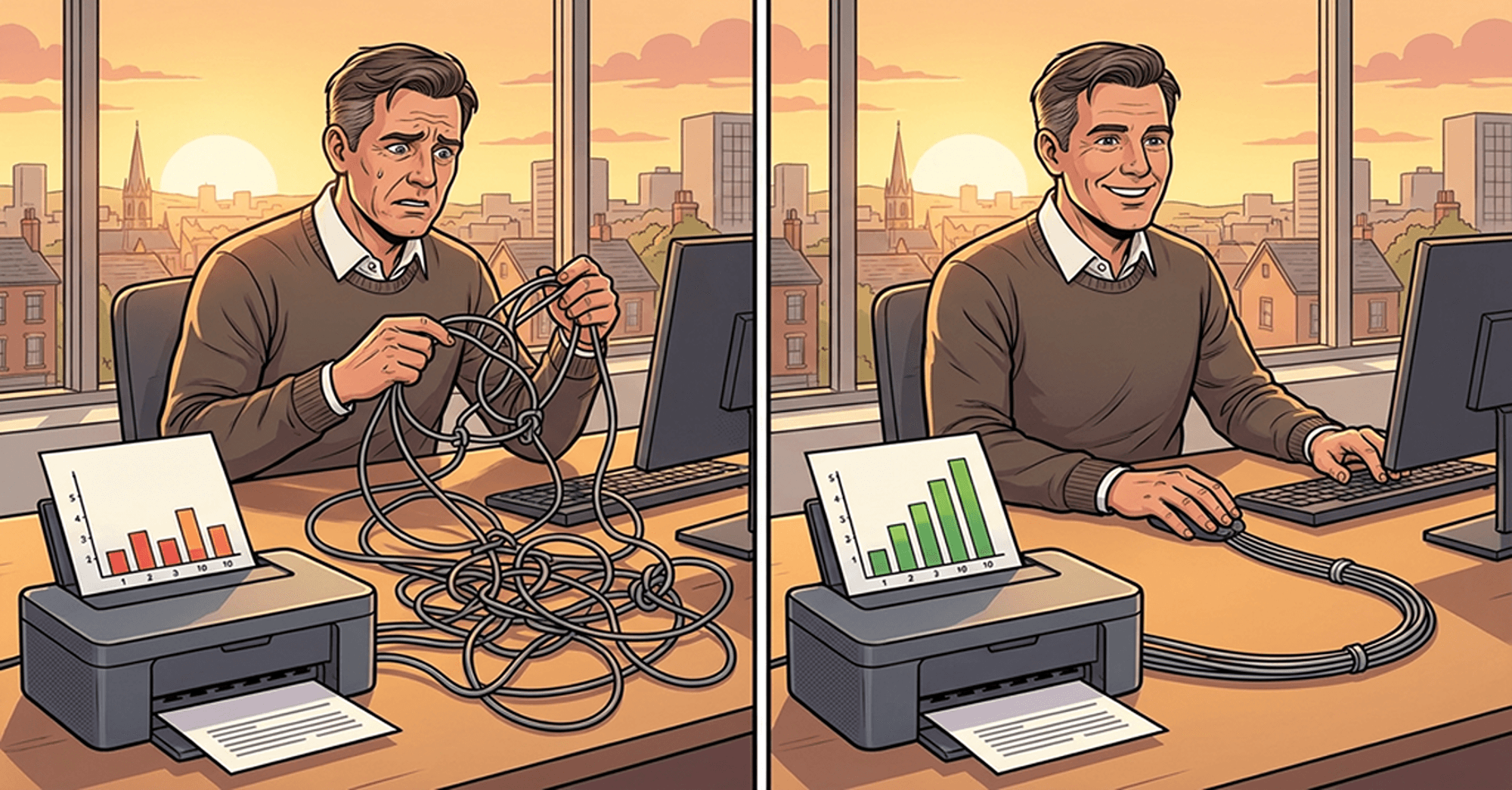
How to Break the Busy Trap
While building frameworks, reallocate time:
Before (£16M business founder):
• Operational work: 55 hours weekly (78%)
• Strategic work: 15 hours weekly (22%)
• Result: Growth stalling
After (same 70 hours):
• Operational work: 28 hours (40%)
• Strategic work: 42 hours (60%)
• Result: Growth resumed at 25% annually
What changed: Transferred operational decisions using frameworks, freed time for strategic work.
The Three Fatal Mistakes
Mistake 1: Delegating Tasks Not Decision-Making
The team executes your work. Still waits for your decisions. Still a bottleneck.
Mistake 2: Going Too Fast, Taking It Back
You delegate 10 things at once. Some go wrong. You panic, take everything back. The team learns they can't be trusted.
Mistake 3: Not Building Frameworks
You expect the team to "figure out" how you think. They guess wrong. You criticise them. They stop trying.
When You Should NOT Attempt This
Don't attempt if:
• You're selling in the next 6 months (too late)
• The business is in crisis (stabilise first)
• You don't trust the team (wrong team or you're the problem)
• You're not willing to let things be done differently
Right time:
• 18-24 months before exit
• The business is stable
• The team is capable but dependent
• You're ready to let go
Frequently Asked Questions
How long does it take to remove founder dependency?
Removing founder dependency takes 12-18 months minimum using a systematic approach. Months 1-6 build the foundation and feel slower. Months 7-12 establish the new operating model. Months 13-18 prove independence. Anyone promising 6 months either hasn't done it or is removing dependency so fast it won't stick. Research shows transformations capture value progressively over 18+ month – rushing undermines sustainability (McKinsey, 2021).
What should I do first when removing founder dependency?
First 90 days: Days 1-30 map every decision. Days 31-60 document decision frameworks capturing how you think. Days 61-90 test frameworks with the team through repetition. Research shows the first 90 days strongly determine long-term success (Watkins, The First 90 Days), and Gallup’s study of Inc. 500 CEOs shows leaders who delegate decision frameworks outperform those who delegate tasks alone. The foundation built in the first 90 days determines success or failure.
Why does being busy slow growth?
Being busy slows growth because busy means working IN the business on operations, not ON the business building growth. Research shows that founders who prioritise strategic work and delegate operational activity significantly outperform those who remain heavily operational, while operationally focused founders experience materially slower growth (Verheul & Thurik, 2009; Gallup, 2015). The busy trap is self-reinforcing: growth creates operational work, operational work crowds out strategic time, growth initiatives stall, and founder dependency increases.
"I want to remove founder dependency but I'm terrified the business will collapse. Where do I start? What happens in the first 90 days?"
The truth no one tells you:
• It takes 12-18 months minimum, to remove founder dependency.
• It WILL feel broken in months 1-6 (that's progress)
• You'll want to take control back 100 times (don't)
• It works if you map decisions, build frameworks, transfer through coaching.
Plus the growth paradox: Being busier is WHY growth is slowing.
What Founder Dependency Costs at Exit
Two identical £25M businesses, same EBITDA (£2.5M):
Business A (Founder-Dependent): Sale at 4.2x = £10.5M
Business B (Systematized): Sale at 8.1x = £20.3M
Difference: £9.8M
Buyers don't want your genius. They want systems that work without you.
Why Being Busy Kills Growth
"We're busier than ever. Working 70+ hours. But growth is slowing. How?"
Because busy = working IN the business, not ON the business.
Time allocation predicts growth:
• High growth (20%+ annually): Founders spend 60% on strategic work
• Slow growth (<5%): Founders spend 80% on operational work
The trap: Success creates operational work → Founder gets busy → No time for growth initiatives → Growth slows → More operational problems → Busier → Slower growth.
The First 90 Days Roadmap
Wrong approach (28% success rate):
Delegate tasks to free up the calendar. Tell people what to do. Focus on reducing hours.
Result: The team executes tasks, still waits for decisions. Still a bottleneck.
Right approach (71% success rate):
Days 1-30: MAP Every Decision
Not tasks - DECISIONS. Keep a log: what decision, what factors were considered, how you decided. Most founders: 40-60 distinct decision types.
Days 31-60: DOCUMENT Decision Frameworks
For each type: How do you think about it? What factors? What trade-offs? What principles? Cannot rush this.
Days 61-90: TEST Frameworks with the Team
The team makes decisions using the framework. They explain their thinking. You coach the reasoning (not the outcome). Repeat 10-15 times until it's internalized.
The 18-Month Timeline
Months 1-3: Everything Feels Slower
Building frameworks. The team is making mistakes you'd avoid. You want to step back in (don't).
Months 4-6: Still Feels Broken
The team is making more decisions, quality is variable. You're coaching, not doing. Performance might dip 5-10% (temporary).
Months 7-9: Starting to Work
Some decisions are happening correctly without you. Quality is matching or exceeding yours. You have time for strategic work.
Months 10-12: Running Differently
Most tactical/operational decisions are independent. You're focused on strategy. Performance is improving.
Months 13-18: Independence Proven
You take a 2-week holiday, zero contact. The business runs smoothly. Dependency removed.
Anyone promising 6 months hasn't done it successfully.
How to Break the Busy Trap
While building frameworks, reallocate time:
Before (£16M business founder):
• Operational work: 55 hours weekly (78%)
• Strategic work: 15 hours weekly (22%)
• Result: Growth stalling
After (same 70 hours):
• Operational work: 28 hours (40%)
• Strategic work: 42 hours (60%)
• Result: Growth resumed at 25% annually
What changed: Transferred operational decisions using frameworks, freed time for strategic work.
The Three Fatal Mistakes
Mistake 1: Delegating Tasks Not Decision-Making
The team executes your work. Still waits for your decisions. Still a bottleneck.
Mistake 2: Going Too Fast, Taking It Back
You delegate 10 things at once. Some go wrong. You panic, take everything back. The team learns they can't be trusted.
Mistake 3: Not Building Frameworks
You expect the team to "figure out" how you think. They guess wrong. You criticise them. They stop trying.
When You Should NOT Attempt This
Don't attempt if:
• You're selling in the next 6 months (too late)
• The business is in crisis (stabilise first)
• You don't trust the team (wrong team or you're the problem)
• You're not willing to let things be done differently
Right time:
• 18-24 months before exit
• The business is stable
• The team is capable but dependent
• You're ready to let go
Frequently Asked Questions
How long does it take to remove founder dependency?
Removing founder dependency takes 12-18 months minimum using a systematic approach. Months 1-6 build the foundation and feel slower. Months 7-12 establish the new operating model. Months 13-18 prove independence. Anyone promising 6 months either hasn't done it or is removing dependency so fast it won't stick. Research shows transformations capture value progressively over 18+ month – rushing undermines sustainability (McKinsey, 2021).
What should I do first when removing founder dependency?
First 90 days: Days 1-30 map every decision. Days 31-60 document decision frameworks capturing how you think. Days 61-90 test frameworks with the team through repetition. Research shows the first 90 days strongly determine long-term success (Watkins, The First 90 Days), and Gallup’s study of Inc. 500 CEOs shows leaders who delegate decision frameworks outperform those who delegate tasks alone. The foundation built in the first 90 days determines success or failure.
Why does being busy slow growth?
Being busy slows growth because busy means working IN the business on operations, not ON the business building growth. Research shows that founders who prioritise strategic work and delegate operational activity significantly outperform those who remain heavily operational, while operationally focused founders experience materially slower growth (Verheul & Thurik, 2009; Gallup, 2015). The busy trap is self-reinforcing: growth creates operational work, operational work crowds out strategic time, growth initiatives stall, and founder dependency increases.

" height="39.65002px" id="dyBuTZHxn" transform="translate(0 1.907)" width="39.651px"/><path d="M 20.978 11.868 C 21.065 12.063 21.069 12.282 20.99 12.482 C 20.912 12.681 20.756 12.839 20.559 12.919 C 17.474 14.2 5.621 19.119 1.097 20.999 C 0.801 21.122 0.46 21.051 0.233 20.827 C 0.006 20.599 -0.062 20.257 0.06 19.962 C 1.932 15.436 6.835 3.575 8.112 0.491 C 8.193 0.291 8.352 0.134 8.55 0.054 C 8.749 -0.023 8.971 -0.018 9.167 0.068 C 14.398 2.447 18.596 6.639 20.978 11.868 Z" fill="rgb(243, 183, 3)" height="21.059159164719897px" id="j9USqGJeT" transform="translate(20.497 0)" width="21.04621552472423px"/></svg>)
The Executive
Partnership
Built to Scale. Ready to Sell.
The Executive Partnership Limited
Company No. 16340502 | Registered in England and Wales
Registered Office: Chandos House, School Lane, Buckingham, MK18 1HD, UK
The Executive
Partnership
Built to Scale. Ready to Sell.
The Executive Partnership Limited
Company No. 16340502 | Registered in England and Wales
Registered Office: Chandos House, School Lane, Buckingham, MK18 1HD, UK
The Executive Partnership
Built to Scale. Ready to Sell.
The Executive Partnership Limited
Company No. 16340502 | Registered in England and Wales
Registered Office: Chandos House, School Lane, Buckingham, MK18 1HD, UK