What Do PE Firms Actually Want When They Say "Operational Improvement"?
Exit / Sale
Exit / Sale
/
/
TEP
TEP
"A PE firm said they want 'operational improvement potential' before investing. What does that actually mean?"
Translation: Installing systems that increase EBITDA 20-40% through better decision-making and resource utilisation.
Not: Cost cuts, working harder, growing faster
But: Systematic improvements that increase EBITDA without proportional cost increase
The Five Operational Improvements PE Firms Evaluate
1. Decision-Making Speed and Quality
• Current: Decisions take 4-8 weeks, escalate to founder
• Improved: Made in days using frameworks
• EBITDA impact: 15-25% more opportunities captured
2. Resource Utilisation
• Current: 60-70% utilisation
• Improved: 80-85% through better planning
• EBITDA impact: 8-15% margin improvement
3. Pricing Discipline
• Current: Reactive pricing, inconsistent discounting
• Improved: Value-based pricing, disciplined policy
• EBITDA impact: 5-12% margin improvement
4. Cash Conversion Efficiency
• Current: 60-90 day collections
• Improved: 30-45 day collections
• EBITDA impact: 20-30% working capital freed
5. Scalability Potential
• Current: Revenue doubles, costs double
• Improved: Revenue doubles, costs increase 60-70%
• EBITDA impact: Margin expansion through scale
How to Demonstrate Improvement Potential
Real PE targeting example: £18M business at 15% EBITDA margin demonstrated:
• Resource utilisation improvement: +8% EBITDA potential
• Pricing optimisation: +6% EBITDA potential
• Working capital efficiency: +4% EBITDA
Value impact:
• Current: 15% margin = £2.7M EBITDA × 10x = £27M value
• Potential: 22% margin = £4M EBITDA × 10x = £40M value
• PE saw: £13M value creation opportunity
Result: PE invested at premium valuation because improvement was systematic and measurable.
The Four-Step Roadmap
Step 1: Identify improvement areas (Month 1-2)
• Where is utilisation <75%?
• Where are decisions taking >2 weeks?
• Where is pricing reactive?
• Where is working capital tied up?
Step 2: Quantify EBITDA impact (Month 3)
• Utilisation +10% = X% EBITDA
• Decision speed +50% = Y% opportunity capture
• Pricing discipline = Z% margin
Step 3: Create improvement roadmap (Month 4)
• What gets implemented when
• EBITDA impact by quarter
• Required investment
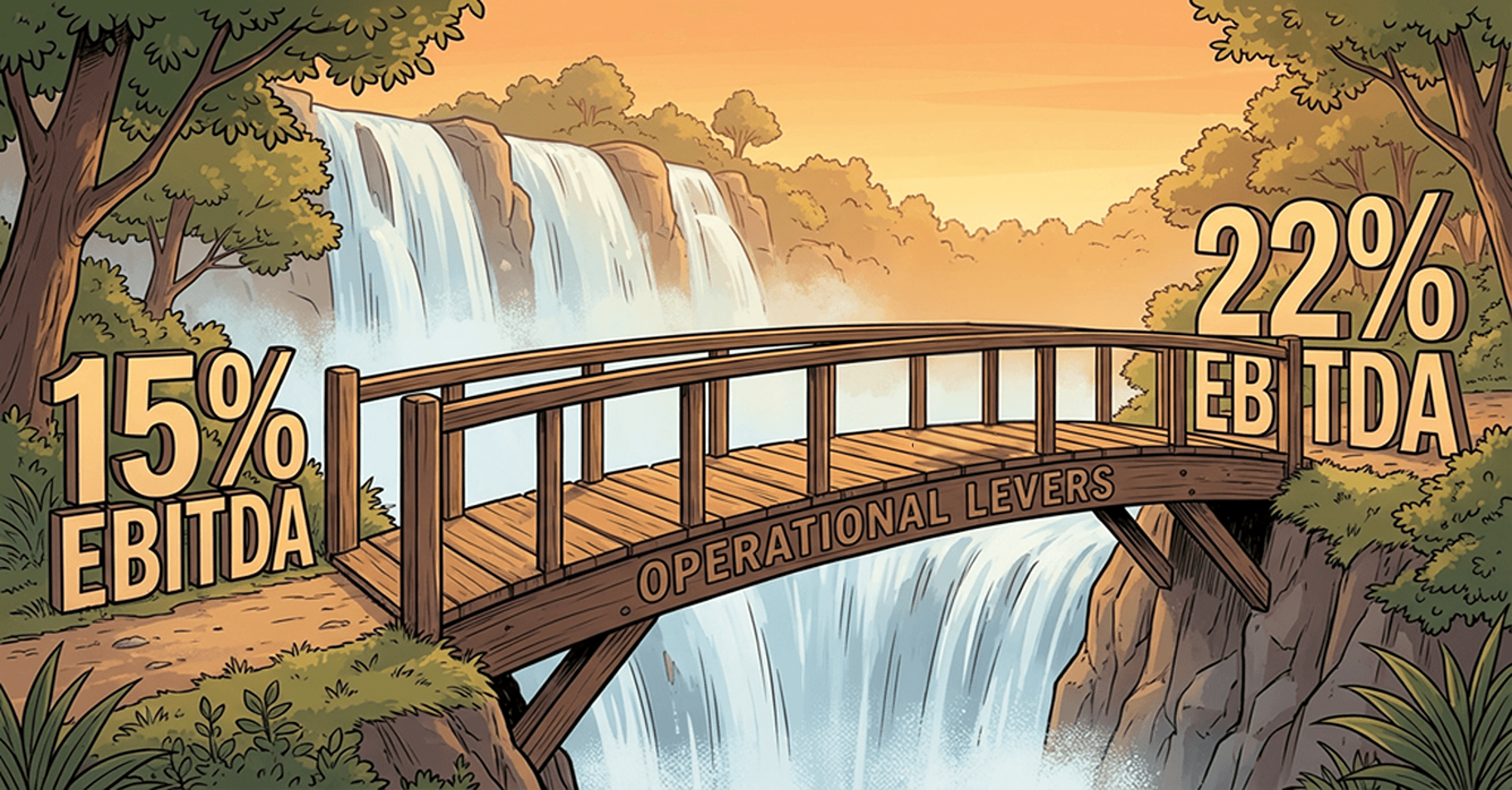
Result: PE firms see a clear path 15% → 22% EBITDA = £13M value creation they can underwrite.
What PE Firms Pay For
They don't pay for:
• Current performance (table stakes)
• Promises of improvement (too vague)
• Your belief you can do better (unsubstantiated)
They pay a premium for:
• Systematic improvement potential (quantified)
• Clear roadmap to achieve it (credible)
• Proven capability to execute (track record)
Valuation impact:
• No clear improvement potential: 6-7x EBITDA
• Demonstrated improvement potential: 9-11x EBITDA
• Difference on a £20M business: £6-10M
When You Should NOT Pursue PE
Wrong fit:
• Want capital but not operational involvement
• Not ready for 20-30% EBITDA improvement push
• Founder wants full control
• Cannot demonstrate systematic improvement potential
Right fit:
• Clear operational improvement identified
• Ready for partnership (not just capital)
• Ambitious growth requiring investment
• Business model supports margin expansion
Frequently Asked Questions
What does operational improvement mean to PE firms?
Operational improvement to PE firms means installing systems that increase EBITDA 20-40% through better decision-making and resource utilization, not cost cuts. PE targets five areas: Decision-making speed (15-25% opportunity capture), resource utilization (8-15% margin improvement), pricing discipline (5-12% margin), cash conversion (20-30% working capital freed), scalability (margin expansion through scale). PE firms invest in improvement potential not current performance.
How do I demonstrate operational improvement potential to PE?
Demonstrate by: (1) Identifying specific improvement areas with current metrics, (2) Quantifying EBITDA impact of improvements (utilisation to 80% = 8% EBITDA improvement), (3) Creating a credible roadmap showing implementation timeline with quarterly EBITDA impact. PE firms pay premium valuations for systematic quantified improvement potential. Businesses demonstrating this get 9-11x EBITDA vs 6-7x without.
"A PE firm said they want 'operational improvement potential' before investing. What does that actually mean?"
Translation: Installing systems that increase EBITDA 20-40% through better decision-making and resource utilisation.
Not: Cost cuts, working harder, growing faster
But: Systematic improvements that increase EBITDA without proportional cost increase
The Five Operational Improvements PE Firms Evaluate
1. Decision-Making Speed and Quality
• Current: Decisions take 4-8 weeks, escalate to founder
• Improved: Made in days using frameworks
• EBITDA impact: 15-25% more opportunities captured
2. Resource Utilisation
• Current: 60-70% utilisation
• Improved: 80-85% through better planning
• EBITDA impact: 8-15% margin improvement
3. Pricing Discipline
• Current: Reactive pricing, inconsistent discounting
• Improved: Value-based pricing, disciplined policy
• EBITDA impact: 5-12% margin improvement
4. Cash Conversion Efficiency
• Current: 60-90 day collections
• Improved: 30-45 day collections
• EBITDA impact: 20-30% working capital freed
5. Scalability Potential
• Current: Revenue doubles, costs double
• Improved: Revenue doubles, costs increase 60-70%
• EBITDA impact: Margin expansion through scale
How to Demonstrate Improvement Potential
Real PE targeting example: £18M business at 15% EBITDA margin demonstrated:
• Resource utilisation improvement: +8% EBITDA potential
• Pricing optimisation: +6% EBITDA potential
• Working capital efficiency: +4% EBITDA
Value impact:
• Current: 15% margin = £2.7M EBITDA × 10x = £27M value
• Potential: 22% margin = £4M EBITDA × 10x = £40M value
• PE saw: £13M value creation opportunity
Result: PE invested at premium valuation because improvement was systematic and measurable.
The Four-Step Roadmap
Step 1: Identify improvement areas (Month 1-2)
• Where is utilisation <75%?
• Where are decisions taking >2 weeks?
• Where is pricing reactive?
• Where is working capital tied up?
Step 2: Quantify EBITDA impact (Month 3)
• Utilisation +10% = X% EBITDA
• Decision speed +50% = Y% opportunity capture
• Pricing discipline = Z% margin
Step 3: Create improvement roadmap (Month 4)
• What gets implemented when
• EBITDA impact by quarter
• Required investment
Result: PE firms see a clear path 15% → 22% EBITDA = £13M value creation they can underwrite.
What PE Firms Pay For
They don't pay for:
• Current performance (table stakes)
• Promises of improvement (too vague)
• Your belief you can do better (unsubstantiated)
They pay a premium for:
• Systematic improvement potential (quantified)
• Clear roadmap to achieve it (credible)
• Proven capability to execute (track record)
Valuation impact:
• No clear improvement potential: 6-7x EBITDA
• Demonstrated improvement potential: 9-11x EBITDA
• Difference on a £20M business: £6-10M
When You Should NOT Pursue PE
Wrong fit:
• Want capital but not operational involvement
• Not ready for 20-30% EBITDA improvement push
• Founder wants full control
• Cannot demonstrate systematic improvement potential
Right fit:
• Clear operational improvement identified
• Ready for partnership (not just capital)
• Ambitious growth requiring investment
• Business model supports margin expansion
Frequently Asked Questions
What does operational improvement mean to PE firms?
Operational improvement to PE firms means installing systems that increase EBITDA 20-40% through better decision-making and resource utilization, not cost cuts. PE targets five areas: Decision-making speed (15-25% opportunity capture), resource utilization (8-15% margin improvement), pricing discipline (5-12% margin), cash conversion (20-30% working capital freed), scalability (margin expansion through scale). PE firms invest in improvement potential not current performance.
How do I demonstrate operational improvement potential to PE?
Demonstrate by: (1) Identifying specific improvement areas with current metrics, (2) Quantifying EBITDA impact of improvements (utilisation to 80% = 8% EBITDA improvement), (3) Creating a credible roadmap showing implementation timeline with quarterly EBITDA impact. PE firms pay premium valuations for systematic quantified improvement potential. Businesses demonstrating this get 9-11x EBITDA vs 6-7x without.

Exit / Sale
/
TEP
Exit / Sale
/
TEP

Exit / Sale
/
TEP
Exit / Sale
/
TEP
" height="39.65002px" id="dyBuTZHxn" transform="translate(0 1.907)" width="39.651px"/><path d="M 20.978 11.868 C 21.065 12.063 21.069 12.282 20.99 12.482 C 20.912 12.681 20.756 12.839 20.559 12.919 C 17.474 14.2 5.621 19.119 1.097 20.999 C 0.801 21.122 0.46 21.051 0.233 20.827 C 0.006 20.599 -0.062 20.257 0.06 19.962 C 1.932 15.436 6.835 3.575 8.112 0.491 C 8.193 0.291 8.352 0.134 8.55 0.054 C 8.749 -0.023 8.971 -0.018 9.167 0.068 C 14.398 2.447 18.596 6.639 20.978 11.868 Z" fill="rgb(243, 183, 3)" height="21.059159164719897px" id="j9USqGJeT" transform="translate(20.497 0)" width="21.04621552472423px"/></svg>)
The Executive
Partnership
Built to Scale. Ready to Sell.
The Executive Partnership Limited
Company No. 16340502 | Registered in England and Wales
Registered Office: Chandos House, School Lane, Buckingham, MK18 1HD, UK
The Executive
Partnership
Built to Scale. Ready to Sell.
The Executive Partnership Limited
Company No. 16340502 | Registered in England and Wales
Registered Office: Chandos House, School Lane, Buckingham, MK18 1HD, UK
The Executive Partnership
Built to Scale. Ready to Sell.
The Executive Partnership Limited
Company No. 16340502 | Registered in England and Wales
Registered Office: Chandos House, School Lane, Buckingham, MK18 1HD, UK